ServicesPool Repair
Pool Repair in Chandler
When the pump stops priming, the heater won't fire or a breaker keeps tripping, we find the cause and fix it properly. You get a plain explanation, a written estimate and a straight answer on whether the repair needs a permit.
Repairs that fix the cause, not just the symptom
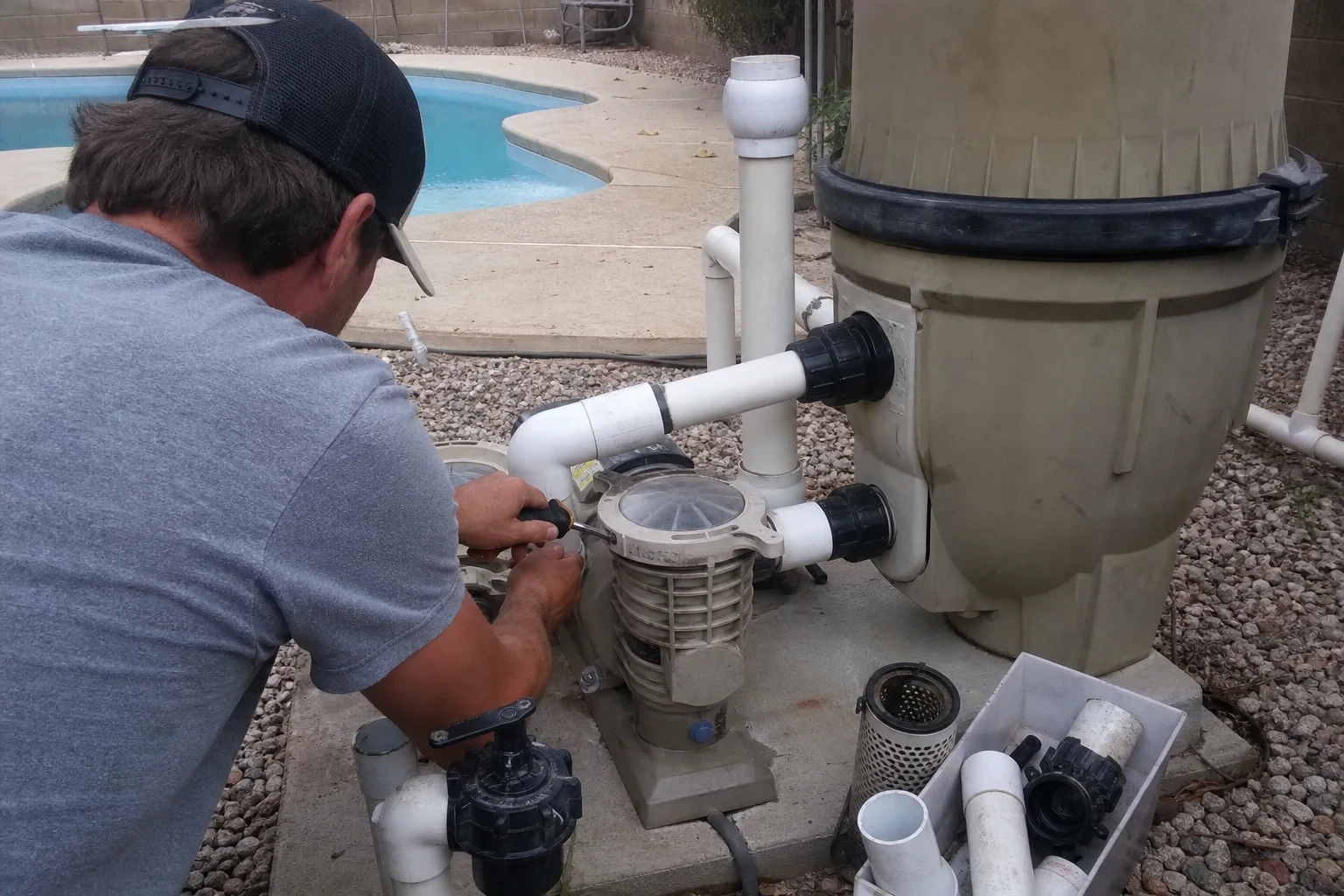
Most pool problems show up at the equipment pad first: a pump that hums but won't start, air in the strainer basket, a filter that won't hold pressure. We trace the problem back to the part that actually failed, so you're not paying for the same visit twice.
Some repairs touch electrical wiring, gas lines or the drain covers that keep swimmers safe. Those come with code requirements, and we tell you up front which ones apply to your job. Pool Cleaning Chandler is ROC licensed, and we handle the permit when one is required, so the work passes inspection and stays safe for your family.
Year-round heat and long pump run times wear out seals, motors and fittings faster than many people expect. A small drip or a noisy bearing is often cheaper to fix now than after it takes out the motor.
What our pool repair covers
- Pump and motor repair
- We replace worn shaft seals, bearings, capacitors and cracked lids, or the whole motor when that makes more sense. If the pump is near the end of its life, we'll say so and explain your options.
- Filter and valve fixes
- Cracked filter tanks, leaking multiport valves, broken pressure gauges and stuck diverter valves. If the filter just needs a deep clean, we'll point you to our filter cleaning service instead.
- Heater troubleshooting
- We check ignition, sensors, flow switches and venting on gas heaters and heat pumps. Gas-side work is done to code, and we explain what that involves before we start.
- Above-ground plumbing
- Cracked PVC, sun-brittle fittings and weeping unions at the equipment pad get cut out and replaced cleanly with proper primer and cement.
- Safety and electrical items
- Anti-entrapment drain covers, pool light fixtures, bonding connections and GFCI protection. These are the repairs where code matters most, and we treat them that way.
Signs your pool needs a repair visit
The pump hums but won't spin
A humming motor that won't start often points to a failed capacitor or seized bearings. Shut it off so the motor doesn't overheat.
Air bubbles in the strainer basket
Air on the suction side means a bad lid O-ring, a loose fitting or a cracked pipe. Left alone, it can burn up the pump.
Water dripping at the equipment
A drip under the pump usually means a worn shaft seal. Catching it early protects the motor below it.
Breaker trips or the light flickers
Electrical problems around water need attention right away. Keep people out of the pool and give us a call.
Filter pressure that won't settle
Pressure that climbs fast or swings around can mean a damaged filter part or a valve problem, not just a dirty filter.
A loose or cracked drain cover
Drain covers prevent entrapment. If one is cracked, missing or past its rated life, the pool shouldn't be used until it's replaced.
How a repair visit works
- 1
A quick phone call
Tell us what you're seeing and hearing. We'll ask a few questions and set up a time to look at it, with a free quote.
- 2
Inspection at your home
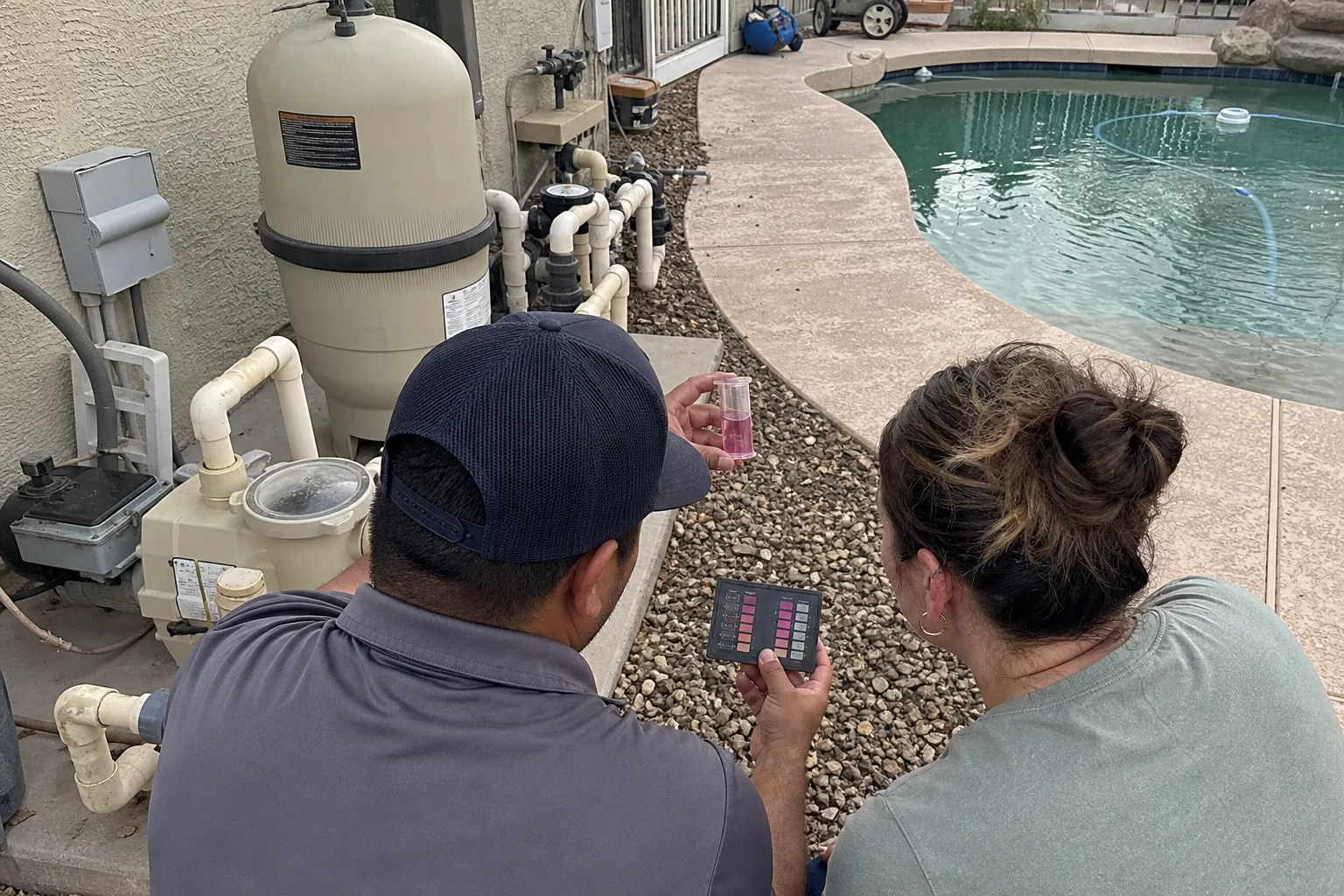
We check the equipment pad, test the electrical side and look at the related parts, not just the one that failed. We show you what we found and explain it in plain terms.
- 3
Written estimate and code answer
You get a line-item estimate and a clear yes or no on whether a permit is needed. Nothing starts until you approve it.
- 4
The repair, tested and cleaned up
We make the repair, run the system, check pressure and flow, and confirm safety items are secured. Old parts and packaging leave with us.
What affects the cost of a pool repair
Every repair is priced from what we find, not a guess over the phone. Your written estimate lists parts and labor separately so you can see where the money goes. These are the main things that move the number.
- The part and its availability
- A seal kit costs far less than a motor. Older or discontinued equipment can mean hunting for parts or choosing a compatible replacement.
- Repair or replace
- Sometimes fixing an aging pump costs nearly as much as a new efficient one. We lay out both options honestly and let you decide.
- Inspection requirements
- Work on gas lines or new electrical circuits can require a permit and a city inspection, which adds time and a fee. Like-for-like part swaps often don't.
- Access and layout
- Tight side yards, crowded equipment pads or plumbing buried in concrete take more labor to reach and rebuild.
Pool repair questions
Something not covered here? (480) 531-8048
Does my repair need a permit?
Many repairs, like replacing a pump seal or a cracked fitting, don't. Work that adds or changes electrical circuits or touches gas lines often does. We'll tell you before work begins and pull it ourselves when one is required.
How long does a typical repair take?
Many part swaps, like a shaft seal, capacitor or cracked fitting, are finished in a single visit. If a part has to be ordered or the work needs an inspection, we'll walk you through the steps and the timing. Where it's safe, we'll keep your pool running in the meantime.
Do your repairs come with a warranty?
Our repairs follow the manufacturer warranties, which run between 1 and 2 years depending on the part. We'll tell you which coverage applies to your repair when we give you the estimate.
Should I repair my old pump or replace it?
It depends on the motor's age, its condition and what the repair costs. If a fix is the smart move, we'll do it. If replacement makes more sense, we'll explain why, and our equipment installation service can handle the new unit.
Can you work on equipment you didn't install?
Yes. Most of our repairs are on equipment put in by builders or previous owners. We work on the common pump, filter and heater brands found on pools around Chandler, Gilbert and Mesa.
Get your pool running right again
Tell us what's going on with your equipment and we'll set up a visit. You'll know what's wrong, what it takes to fix it and which code steps apply before anything starts.